ChatGPT mock interviews vs real AI interview practice
ChatGPT can help with interview preparation, but it is not the same thing as practising a real AI interview. ChatGPT is best for brainstorming answers, improving structure, researching likely questions, and rehearsing in a flexible way. Real AI interview practice is better for simulating the pressure of the actual interview: speaking out loud, answering follow-ups, managing time, and getting feedback on how your answer lands.
That distinction matters because most candidates do not fail interviews because they know nothing. They fail because their answer falls apart when they have to say it under pressure.
This guide explains what ChatGPT is good for, where it falls short, and when to switch from ChatGPT prep to real AI interview practice.
What ChatGPT can do well for interview prep
ChatGPT is a strong preparation tool if you use it for the right jobs.
1. It can generate likely interview questions
If you paste in a job description and ask for likely questions, ChatGPT can produce a useful first list. For example:
Behavioural questions
Motivation questions
Strengths-based questions
Role-specific technical questions
Follow-up questions based on the job description
This is especially useful when you are starting from zero and do not know what to prepare.
2. It can help you structure messy answers
Most candidates have the raw material. They just do not know how to shape it.
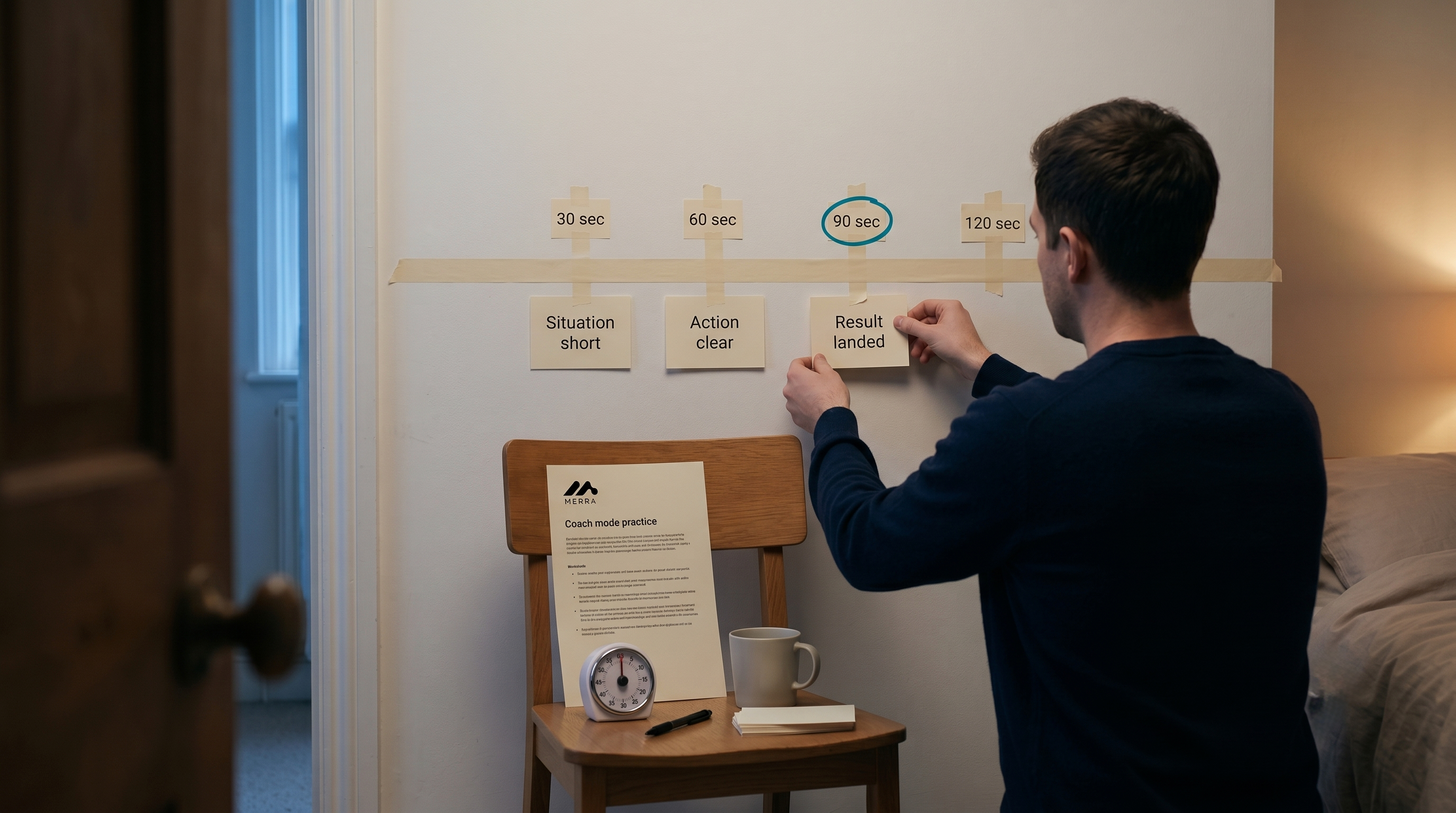
ChatGPT can take a rough story and turn it into a clearer STAR answer:
Situation: What was happening?
Task: What were you responsible for?
Action: What did you personally do?
Result: What changed because of your work?
This is genuinely useful. A messy paragraph can become a clean 90-second answer.
3. It can help you spot weak detail
If you ask ChatGPT to critique an answer, it can often spot obvious gaps:
No clear result
Too much context
Not enough personal contribution
Weak link to the role
Generic motivation for the company
That feedback is not perfect, but it is better than staring at your own answer alone.
4. It can run a mock interview if you prompt it properly
ChatGPT can ask one question at a time, wait for your answer, then give feedback. Voice mode also lets you have a spoken conversation, which is much closer to interview practice than typing.
A good prompt looks like this:
Act as a graduate recruiter for a UK consulting role. Ask me one interview question at a time. After each answer, give direct feedback on structure, specificity, relevance and delivery. Do not be overly positive. Ask realistic follow-up questions when my answer is vague.
That can be helpful, especially early in your prep.
Where ChatGPT falls short
The problem is not that ChatGPT is bad. It is that candidates often use it for the wrong part of the job.
1. It is general-purpose, not interview-purpose
ChatGPT can be an interviewer, a tutor, a travel planner, a coding helper, a writing assistant and a therapist-style sounding board. That flexibility is the point.
But real interview practice benefits from constraints:
A fixed interview flow
One question at a time
Realistic timing
Follow-ups that feel uncomfortable
Feedback after the answer
A transcript you can review
A clear sense of whether your answer would pass
With ChatGPT, you have to build that structure yourself through prompting.
2. It can be too encouraging
Generic AI feedback often sounds supportive by default. That is nice emotionally, but not always useful.
If your answer is vague, a real interviewer will not say:
Great answer, you showed strong communication skills.
They will think:
I still do not know what this person actually did.
To get sharper feedback from ChatGPT, you usually have to ask for it directly:
Be strict. Do not reassure me. Tell me what would make this answer fail.
Most candidates do not do that. They accept the first polite feedback and move on.
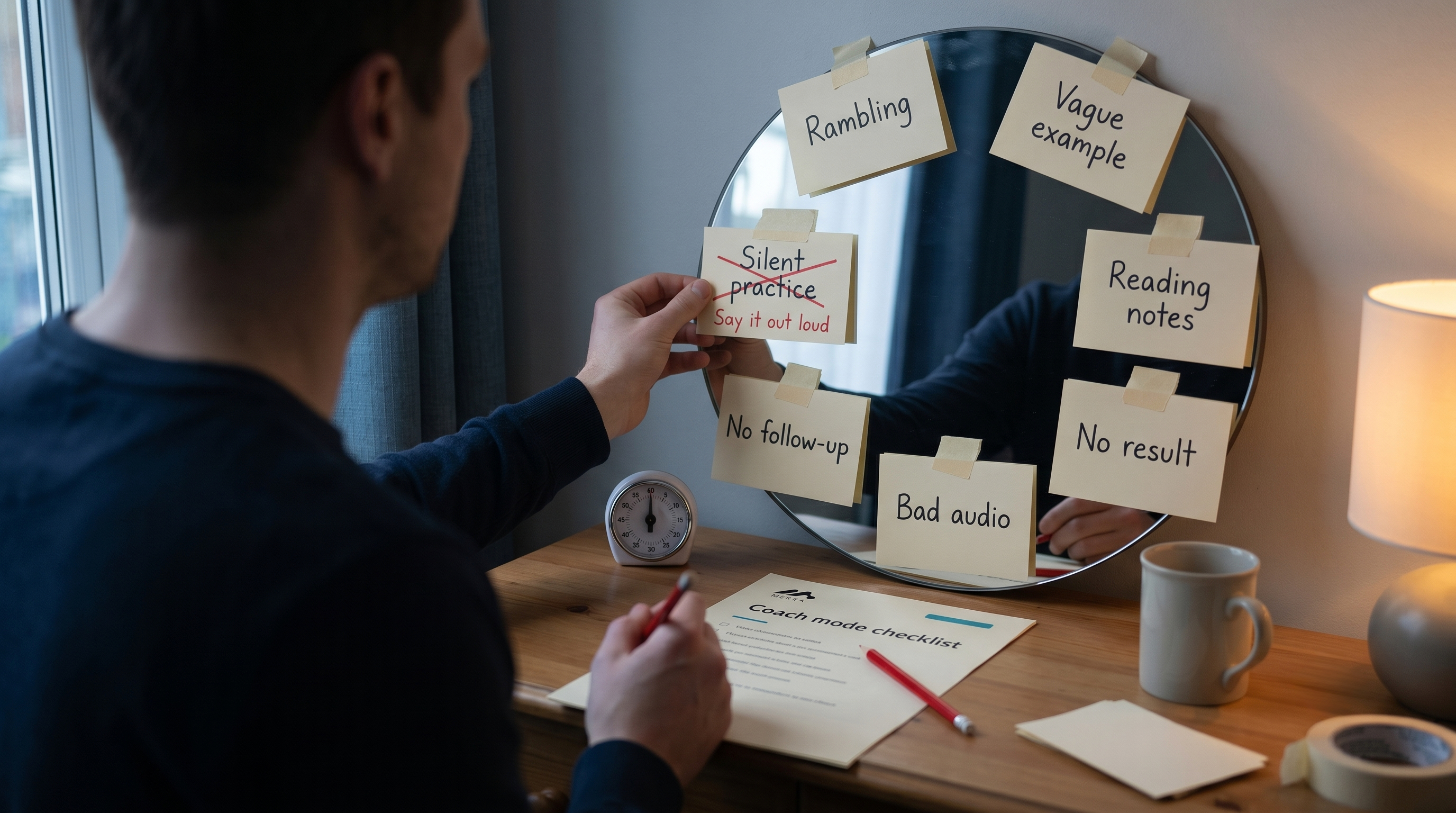
3. Typing is not speaking
This is the biggest issue.
Typing an answer gives you time to think, delete, reorder, and polish. Speaking forces you to perform in real time. You have to manage:
Pace
Filler words
Eye contact or camera focus
Structure
Nerves
Timing
Recovery when you lose your thread
A typed answer can look great while the spoken version sounds flat, rambling or over-rehearsed.
4. It does not naturally feel like the first-round screen
Many real early-careers interviews now happen before a human interview:
One-way video interviews
AI-led voice interviews
AI-scored screening calls
Conversational AI interviews
The candidate experience is different from a normal ChatGPT conversation. You are not casually chatting. You are being assessed. The format itself creates pressure.
ChatGPT can imitate that if prompted well, but it is not the default.
What real AI interview practice should include
If you are preparing for an actual AI or video interview, the practice tool should feel like the real event.
A good AI interview practice session should include:
Voice-first answers. You should speak, not type.
One question at a time. No giant list of questions that lets you pick the easy ones.
Follow-up questions. The system should push when your answer is vague.
Time pressure. Your answer should have a realistic length.
Transcript. You should be able to read what you actually said.
Feedback. Not just encouragement, but specific notes on structure, relevance and clarity.
Role-specific context. A consulting interview should not feel the same as a banking, Big 4 or medical school interview.
Repeatable practice. You should be able to run another session immediately, not wait for a friend or coach.
That is the gap Merra is built to fill.
ChatGPT vs Merra: the honest comparison
Quick comparison by use case
Brainstorming likely questions
ChatGPT: Strong.
Merra Practice: Focused on practice rather than brainstorming.
Improving written answers
ChatGPT: Strong.
Merra Practice: Useful after the session, based on what you actually said.
Voice practice
ChatGPT: Available through voice mode.
Merra Practice: Core product experience.
Realistic interview flow
ChatGPT: Prompt-dependent.
Merra Practice: Built into the session.
Follow-up pressure
ChatGPT: Possible, but you must ask for it.
Merra Practice: Part of the interview experience.
Role-specific interview tiles
ChatGPT: You create the context yourself.
Merra Practice: Includes tiles like McKinsey Associate Case, Deloitte Graduate Consultant, PwC Audit Associate and KPMG Grad Scheme Strengths.
Best for
ChatGPT: Planning, drafting and refining.
Merra Practice: Practising the real thing out loud.
The simple rule:
Use ChatGPT when you are still figuring out what to say. Use Merra when you need to practise saying it.
The best workflow: use both
You do not need to pick one tool forever. The smartest prep stack uses both.
Step 1: Use ChatGPT to build your story bank
Ask ChatGPT to help you turn your experience into six reusable stories:
Teamwork
Leadership
Conflict
Failure
Problem-solving
Working under pressure
Then ask it to make each answer sharper:
Make this answer more specific. Remove generic wording. Keep it under 90 seconds when spoken out loud.
Step 2: Practise those answers on Merra
Once the stories exist, stop polishing them in a document. Start saying them out loud.
Run a Merra practice session and use the feedback to see what happens under pressure. The point is not to memorise a perfect script. The point is to become fluent enough that you can adapt when the question changes.
Step 3: Go back to ChatGPT for targeted repair
After a Merra session, take the weak answer and ask ChatGPT:
Here is my answer transcript. Rewrite it into a clearer STAR structure, but keep the details true. Do not invent achievements or metrics.
Then practise the improved version again.
That loop works better than either tool alone:
ChatGPT for thinking. Merra for performing.
7 mistakes candidates make with ChatGPT mock interviews
1. Asking for a list instead of a live mock
A list of questions feels productive, but it is not practice. Ask for one question at a time.
2. Accepting vague feedback
If the feedback says "good answer", ask:
What specifically would make this fail in a real graduate interview?
3. Letting ChatGPT write fake achievements
Do not invent numbers, leadership moments or impact. Interviewers ask follow-ups. Fake stories collapse quickly.
4. Over-polishing answers until they sound unnatural
A perfect written answer often sounds robotic when spoken. Aim for clear, human and specific.
5. Practising only by typing
Typing builds ideas. Speaking builds interview performance. You need both.
6. Not using role context
"Interview me for a job" is too broad. Give the role, company type, seniority and format.
7. Never testing under pressure
If you only practise when you can pause, edit and restart, you are not rehearsing the actual interview.
When ChatGPT is enough
ChatGPT may be enough if:
You are early in your prep
You are brainstorming possible questions
You need help structuring stories
You are preparing for a casual first chat
You are not facing an AI, video or timed interview format
In those cases, it is a very useful tool.
When you need real AI interview practice
Switch to real AI interview practice if:
Your interview is pre-recorded, AI-led or timed
You panic when speaking out loud
Your answers are too long
You ramble without noticing
You struggle with follow-up questions
You want feedback on what you actually said, not what you meant to say
You need to practise for a specific format like a Big 4 video interview, consulting case screen, banking spring week or medical school MMI
That is when the format matters as much as the content.
How to use Merra to prepare
Merra Practice is built for the real first-round AI interview, practised before it counts. You choose a role or format, answer questions out loud, get follow-ups, and review feedback so you know what to fix before the actual interview.
Relevant Merra tiles include:
McKinsey Associate Case for consulting case-style practice
Deloitte Graduate Consultant for Big 4 graduate interview practice
PwC Audit Associate for professional-services fit questions
KPMG Grad Scheme Strengths for strengths-based graduate interviews
JP Morgan Spring Week Markets for investment banking spring week prep
You can practice live at trymerra.ai/practice. Interview and Coach modes are free. Additional modes including Beast, Hype, Curveball, Rapid Fire, Skeptic, Silent Treatment and Devil's Advocate are available on Pro.
Bottom line
ChatGPT is a strong interview prep assistant. It can help you think, draft, structure and rehearse. But interviews are not won on written answers. They are won when you can speak clearly under pressure, answer the question in front of you, and recover when the follow-up is harder than expected.
Use ChatGPT to prepare the material. Use Merra to practise the moment.
About the founder
Ahmed Ghelle is the founder of Merra. Merra builds voice-based AI mock interviews that talk back, helping students prepare for consulting, banking, and graduate scheme interviews. He writes about hiring, interview preparation, and the gap between how people practise and what actually works.