How long should AI interview answers be?
AI interview answers should usually be 60 to 90 seconds long. That is the sweet spot for most behavioural, competency and motivation questions. It gives you enough time to answer clearly, include one specific example, and finish with a result, without drifting into a ramble.
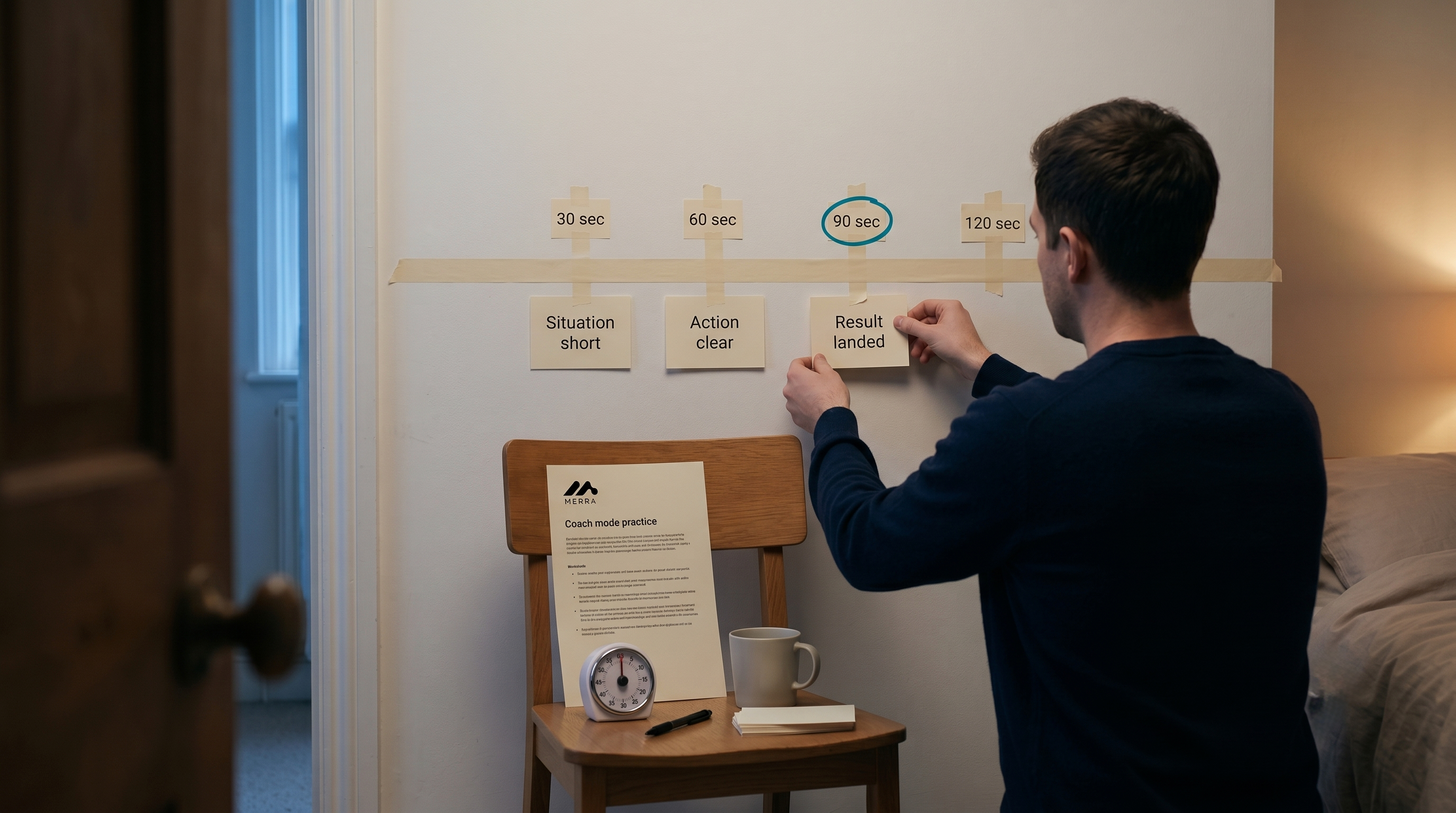
If the question is simple, aim for 30 to 45 seconds. If it asks for a full STAR example, aim for 90 seconds. If the platform gives you 2 or 3 minutes, treat that as the maximum, not the target.
The goal is not to fill the time. The goal is to answer the question well.
Why answer length matters more in AI interviews
In a live interview, the interviewer can interrupt, nod, redirect you or ask a follow-up. In a one-way video interview or AI interview, you often do not get that feedback. You answer into a camera or microphone, then the platform moves on.
That makes timing more important.
If your answer is too short, you sound underprepared. If it is too long, you sound unfocused. If the timer cuts you off, your strongest point may never be heard.
Most one-way video interviews also create pressure by showing a countdown. Some platforms give you around 60 seconds. Some give 2 or 3 minutes. Some vary the time by question. The exact limit matters, but your internal pacing matters more.
A good answer should feel complete before the timer forces it to end.
The simple timing rule
Use this as your default map:
30 to 45 seconds: simple questions
Use this for short motivation or direct questions, such as:
Why are you interested in this role?
What are your strengths?
Why this company?
What do you know about us?
The structure is simple:
Direct answer
One specific reason or example
Link back to the role
Example pacing:
10 seconds: direct answer
20 seconds: specific reason
10 seconds: role link
Do not turn a simple question into a life story.
60 to 90 seconds: most AI interview answers
This is the default range for most questions:
Tell me about yourself.
Tell me about a time you worked in a team.
Describe a time you solved a problem.
Tell me about a challenge you faced.
Why should we hire you?
This length lets you include enough detail without losing the thread. If you practise only one timing range, practise this one.
90 to 120 seconds: deeper STAR answers
Use this when the question clearly asks for a detailed example:
Tell me about a time you led a team through a difficult situation.
Describe a time you failed and what you learned.
Tell me about a time you handled conflict.
Give an example of when you used data to make a decision.
These need more room because the interviewer wants evidence, not just a claim. Even then, keep it tight. A two-minute answer should still have a beginning, middle and end.
2 to 3 minutes: only when the question demands it
Some platforms, including common one-way video tools, may allow up to 2 or 3 minutes per answer. That does not mean every answer should be 3 minutes.
Use the full time only when:
The question has several parts
You are explaining a technical project
You are walking through a case-style answer
The instructions explicitly ask for detail
For most graduate, internship and early-careers interviews, a 3-minute answer is too long unless the question is unusually complex.
The 60 to 90 second STAR structure
For behavioural questions, use this timing split:
Situation: 10 to 15 seconds
Set the scene quickly. Where were you? What was happening? Why did it matter?
Task: 5 to 10 seconds
Say what you were responsible for. Keep this short.
Action: 35 to 50 seconds
This is the most important part. Explain what you personally did. Not what the team did. Not what happened around you. Your actions.
Result: 10 to 15 seconds
Finish with the outcome. Use a number if you have one. If you do not, explain the concrete change.
Reflection: 5 to 10 seconds
Add one sentence on what you learned or how it changed your approach.
That gives you a strong 75 to 90 second answer without rushing.
What too short sounds like
A too-short answer usually has one of three problems:
1. It makes a claim without proof
Weak answer:
I am good under pressure because I stay calm and organised.
That may be true, but it is not evidence.
Stronger answer:
I stay calm under pressure because I break the problem into steps. For example, during a university society event, two speakers cancelled on the day. I split the team into outreach, logistics and comms, found a replacement speaker within two hours, and kept the event running with 80 attendees.
Now there is proof.
2. It skips the result
If you do not explain what changed, the interviewer cannot judge impact.
Always end with what happened because of your action.
3. It sounds like you are trying to escape the question
A 20-second answer can make you sound nervous, even if the content is fine. Give yourself enough room to show thought.
What too long sounds like
A too-long answer usually has different problems:
1. Too much background
Candidates often spend the first minute explaining the context. By the time they reach the action, the listener has lost interest.
Cut the setup. Start closer to the moment that matters.
2. Too many examples
One good example is stronger than three shallow examples. Pick the best story and stay with it.
3. No landing sentence
A rambling answer often fades out with:
So yeah, that was basically it.
Do not end like that. Write a clean closing sentence before you practise.
For example:
That taught me to communicate early when a project is slipping, rather than waiting until the deadline is already at risk.
That sounds finished.
The 10 second buffer rule
Always aim to finish at least 10 seconds before the timer ends.
If the platform gives you 90 seconds, practise finishing at 80. If it gives you 2 minutes, practise finishing around 1:45. This gives you space to breathe, correct yourself, or land the final sentence without panic.
The worst moment in a video interview is realising you have 5 seconds left and still have not reached the result. The buffer prevents that.
How to practise answer length
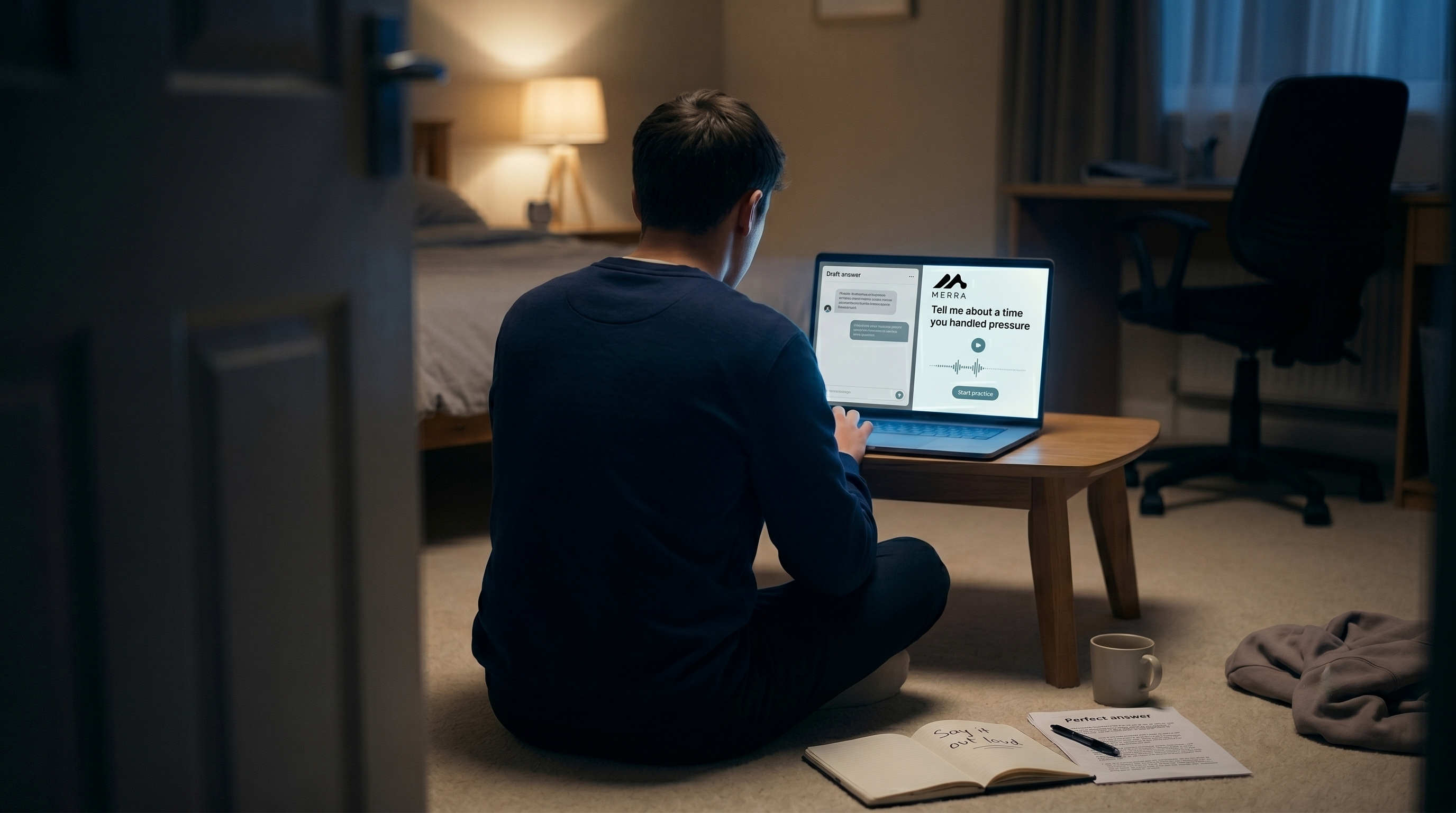
Reading your answer silently does not count. Typing it into ChatGPT does not count either. You need to say it out loud.
Use this drill:
Pick one common interview question.
Set a timer for 90 seconds.
Answer out loud without stopping.
Write down where you ran out of time or started rambling.
Do it again, aiming to finish in 75 to 85 seconds.
Repeat until the answer feels natural, not memorised.
Do this with 5 core stories and you will cover most AI interview formats.
How many words is a 90 second answer?
Most people speak at around 130 to 160 words per minute in normal conversation. In interviews, nerves often make candidates speak faster.
As a rough guide:
30 seconds: 65 to 80 words
60 seconds: 130 to 160 words
90 seconds: 190 to 240 words
120 seconds: 260 to 320 words
If your written answer is 500 words, it is not a 90 second answer. It is a script you will not finish.
The best test is not word count. It is recording yourself and checking the timer.
How to use Merra to practise timed answers
Merra Practice helps you rehearse the real first-round AI interview before it counts. You answer out loud, get follow-up questions, and review feedback on what you actually said.
For answer length, use Merra in three ways:
1. Practise the 60 to 90 second answer
On the Practice tier, run an Interview mode session and focus on finishing each answer cleanly. Do not try to sound perfect. Try to sound structured.
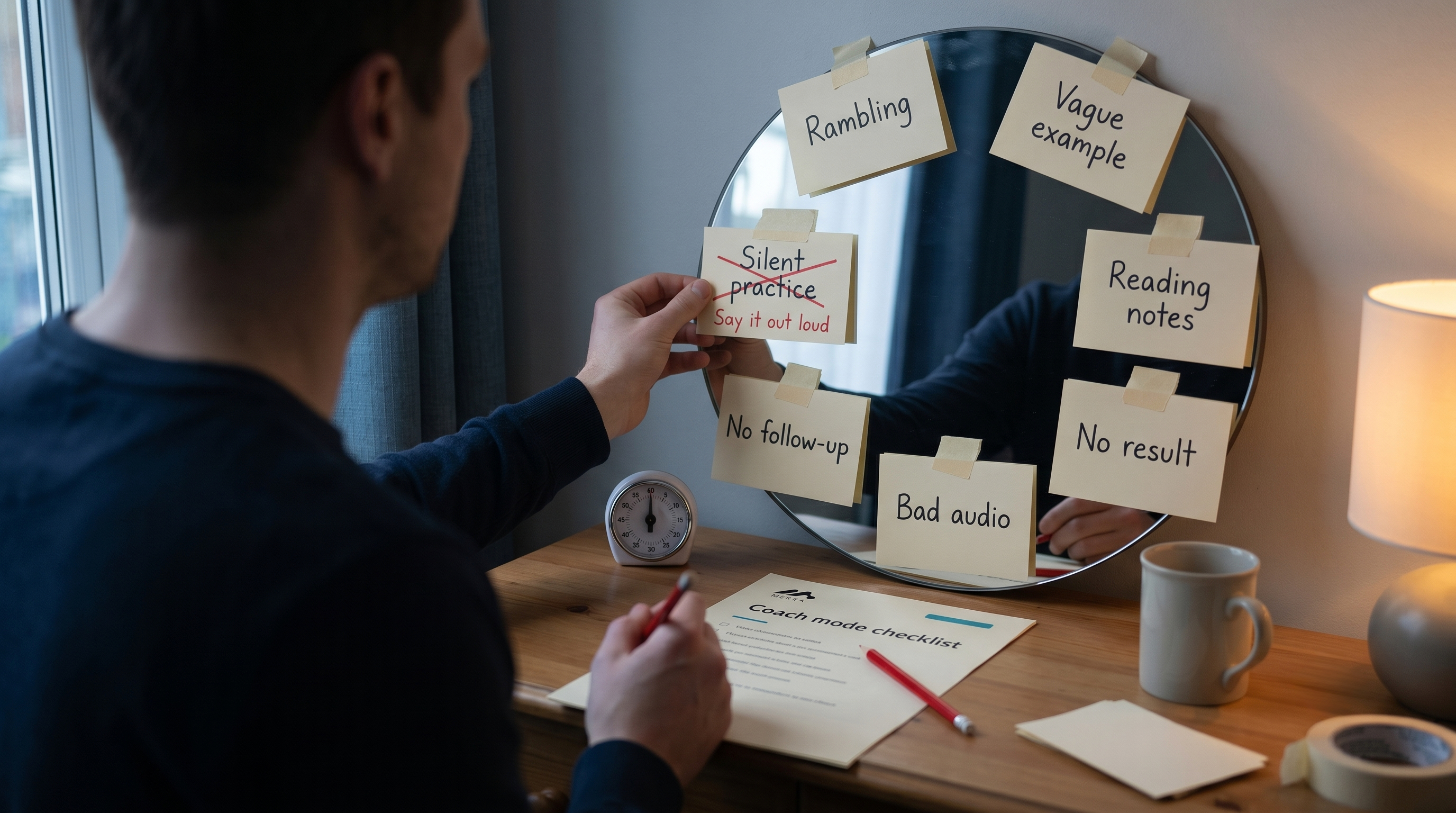
2. Use Coach mode to fix rambling
If you keep talking too long, Coach mode can help you tighten the structure. The goal is not to say less for the sake of it. The goal is to remove the parts that do not help.
3. Review the transcript
The transcript shows what came out of your mouth, not what you meant to say. Look for repeated phrases, long setup, missing results and weak endings.
You can practice live at trymerra.ai/practice. When you sign up, you get one free interview in Coach mode. The Practice tier includes Interview mode, Coach mode and Beast mode. The Pro tier unlocks all 9 AI personalities.
Quick answer length checklist
Before your AI interview, remember:
Simple motivation question: 30 to 45 seconds
Standard behavioural question: 60 to 90 seconds
Detailed STAR example: 90 to 120 seconds
Complex or technical answer: up to the platform limit, only if needed
Always leave a 10 second buffer
One strong example beats three weak ones
End with a clear result or reflection
Practise out loud, not just in your head
Bottom line
Most AI interview answers should be 60 to 90 seconds. That range is long enough to show evidence and short enough to stay focused. Use shorter answers for simple questions, longer answers for detailed STAR stories, and never treat the platform timer as a target.
The best answer does not fill the time. It earns the time.
About the founder
Ahmed Ghelle is the founder of Merra. Merra builds voice-based AI mock interviews that talk back, helping students prepare for consulting, banking, and graduate scheme interviews. He writes about hiring, interview preparation, and the gap between how people practise and what actually works.