What a Spring Week actually is
A Spring Week (sometimes branded Spring Insight, Spring into Banking, Discovery, Future Possibilities, Tomorrow's Talent, Early Insight, Discover and so on) is a short insight programme run by investment banks, asset managers and a few other finance firms during the UK Easter break. It is the earliest formal step on the UK investment banking and broader finance career path.
Length: typically 4-5 days. Deutsche Bank's Spring into Banking is explicitly a 4-day programme, for example. A few firms run it across one full week including travel.
When: during the spring vacation (usually late March or early April).
Who it's for: first-year students on a 3-year UK undergraduate degree, or second-year students on a 4-year UK undergraduate degree (for example Scottish degrees, year-abroad degrees, or integrated masters). Any subject - the firms are explicit that you don't need to be studying finance or economics.
What happens during the week: division overviews, panel sessions, networking with analysts and senior bankers, simulated work tasks or case studies, and a lot of structured small-group conversation. You are not expected to do real billable work.
The practical point of a Spring Week, from the firm's side, is to identify candidates worth fast-tracking into the Summer Internship process the following year. From your side, it's a low-stakes way to find out which division you actually want to be in (M&A vs Markets vs Asset Management vs Research vs Risk vs Wealth Management) before you commit to a 10-week Summer Analyst stint that decides your full-time offer.
The single most important thing to understand: Spring Week is the front door to the Summer Internship, and the Summer Internship is the front door to the Graduate scheme. UK investment banks fill the overwhelming majority of their Graduate Analyst seats from candidates who converted Summer Internship offers, and many of those candidates first met the firm in a Spring Week. The earlier you're inside the funnel, the better.
Which UK firms run Spring Weeks for 2026 / 2027 entry
This is the part of any Spring Week guide most likely to age badly, because firms quietly rename programmes, change formats and drop or add years. Always verify on each firm's own early-careers page before you apply. As a general guide for the most recent application cycle:
Bulge bracket investment banks (UK Spring Week programmes)
JP Morgan - Spring Insight programme, runs across multiple divisions (Investment Banking, Markets, Asset & Wealth Management, Operations, Technology). One of the larger bulge-bracket programmes by intake.
Goldman Sachs - Future Possibilities Insight Event and related Spring Insight events. Smaller, very selective.
Morgan Stanley - Spring Insight programme across IBD, Sales & Trading, Research and Asset Management.
Bank of America - Spring Insight Week in London, across Banking & Markets and Corporate Functions.
Citi - Spring Insight programme across multiple divisions.
Barclays - Discovery programme.
Deutsche Bank - Spring into Banking (4-day insight programme covering multiple divisions).
HSBC - Insight programmes across Investment Banking, Global Markets and Wealth.
UBS - Tomorrow's Talent Spring Insight programme.
BNP Paribas - UK Spring Insight programme.
Elite boutiques and independent advisory firms
Evercore - Spring Weeks programme.
Lazard - UK Spring Insight programme.
Rothschild & Co - Early Insights programmes (typically week-long).
Houlihan Lokey, Centerview, Moelis, Perella Weinberg, PJT Partners, Greenhill and other elite boutiques - run smaller, less standardised insight programmes; check each firm's careers page directly.
Piper Sandler - runs a structured Spring Week programme with its own deadline.
Asset managers and other adjacent firms
BlackRock - Spring Insight programme across Investment Management and Technology.
Fidelity International, Schroders, M&G, Legal & General Investment Management - Spring Insight programmes; format varies.
State Street, Bank of New York, Northern Trust and other custody / operations-focused firms - may run shorter early-career insight events rather than a formal Spring Week; check each firm's careers page directly.
If you want a comprehensive live tracker that updates as deadlines move, the UK Finance Tracker on the-trackr.com is the one most UK candidates use. It's not affiliated with any of these firms but the deadlines and opening dates are reliable.
The Spring Week application process, stage by stage
The exact process varies a little firm to firm, but the shape is consistent across the bulge bracket. There are typically 3-4 distinct stages, and most candidates get cut at the HireVue.
Stage 1 - Online application: CV, cover letter, written answers
A short online form (personal details, university, A-level / IB / Highers grades, predicted degree class).
A CV - usually one page.
Either a cover letter (300-500 words) or 2-4 short written answer questions like Why this firm? Why this division? What attracts you to a career in finance?. Some firms ask for both.
For the written answers, the bar is specificity: generic "I am passionate about finance" lines are immediate filters. Bring a real moment - a market event you followed, a deal you read about, a conversation with someone in the industry, a project you ran.
Written answers are screened both by humans and (increasingly) by automated tools that look for clear structure and on-topic answers. Reuse paragraphs across firms only when the question is genuinely identical. Always swap in firm-specific reasons for Why this firm?.
Stage 2 - Psychometric / online tests
Most firms send these immediately after the form. Typical battery:
Numerical reasoning (data interpretation from tables and charts, basic arithmetic, percentages, ratios). Usually 15-25 questions in 20-25 minutes.
Verbal reasoning (reading a passage, deciding if a statement is True / False / Cannot Say).
Situational judgement test (SJT) (workplace scenarios with multiple choice responses ranked best-to-worst).
A few firms also run a strengths test or a personality questionnaire.
Common test providers used by UK banks: SHL, Cappfinity, Arctic Shores, Cubiks, Sova, AON cut-e. Each has a distinctive style; the unofficial prep sites for each provider are worth half a day of practice before the real test.
Stage 3 - HireVue video interview
The HireVue is the one-way recorded video interview platform used by JP Morgan, Goldman Sachs, Morgan Stanley, BlackRock, Evercore and several others. You log in, the platform shows you a question, you get a short period to prepare (usually around 30 seconds) and then a longer period to record your answer (usually 2-3 minutes). One attempt per question, or 1-3 retakes depending on the firm.
Typical Spring Week HireVue:
3-5 questions
~30 seconds preparation per question
~2 minutes per answer (some firms allow up to 3)
~30 minutes total
The HireVue is the single biggest cut in the funnel. Most candidates are filtered here.
Stage 4 - Final interview or assessment centre
For some firms (Goldman Sachs, Morgan Stanley, Evercore, occasionally Barclays), strong HireVue performers progress to a final live interview, sometimes called a Superday at Goldman Sachs (though full Superdays are more typical at Summer Internship stage than Spring Week stage). For other firms, the HireVue is the last filter and an offer follows directly.
A small number of firms run a short assessment centre for Spring Week, with a group exercise and a 1:1 interview.
The 8 question types you'll face on the Spring Week HireVue
Almost every Spring Week HireVue question fits into one of these eight buckets. Building a story bank and a structure for each bucket covers the vast majority of what you'll see.
1. Why this firm?
The single most important question. The bar is three concrete reasons that could only be true of this firm, not platitudes that would apply to any of the bulge bracket.
What's strong:
A specific deal the firm ran in the last 18 months that you actually followed.
A specific division or product capability the firm is known for (e.g., Goldman's leveraged finance, JPM's payments business, Morgan Stanley's wealth platform).
A specific person at the firm you've spoken to at a campus event or coffee chat, and the one thing they said that resonated.
What's weak: "I want to work at JP Morgan because it's a top global investment bank with great culture." That sentence works for every firm on your list, which is why it kills your answer.
2. Why this division?
If you're applying to Investment Banking, you should be able to explain in 90 seconds why IB is more interesting to you than Markets, and what specifically about IB work attracts you. The honest version is allowed (you find M&A intellectually interesting because of the X) but it has to be real.
3. Why finance / why now?
For a first-year, the firm knows you don't have full conviction. They're testing clarity of motivation, not certainty. Three components that score:
One specific moment that sparked your interest (a market event, a book, a person, a project).
What you did about it after that moment (followed the FT, started a stocks club, did a finance society competition, shadowed someone, read Liar's Poker or Too Big To Fail).
What you want to learn from the Spring Week itself.
4. Behavioural / tell me about a time you...
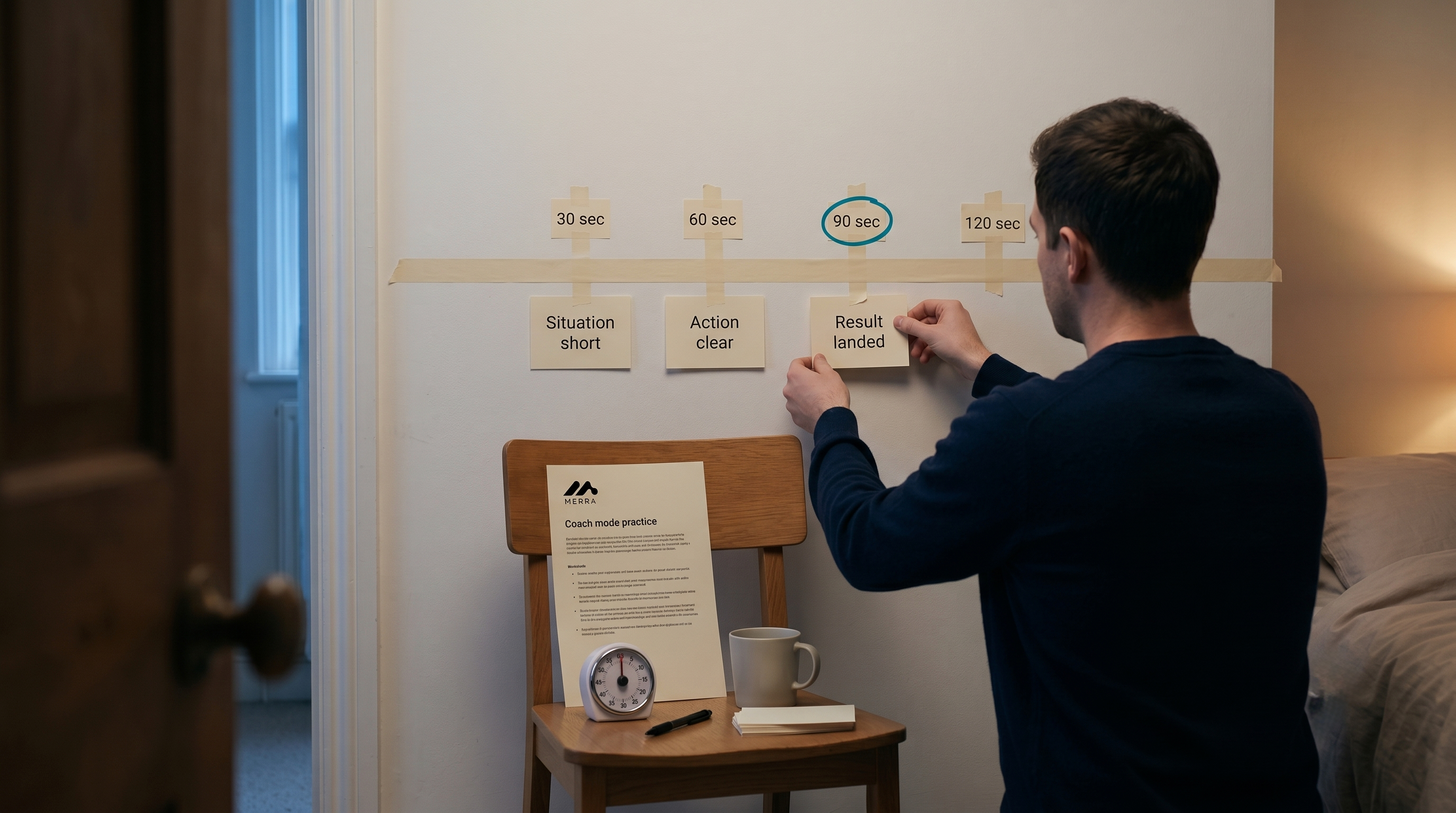
Leadership, teamwork, failure, conflict, going beyond what was asked. Use the STAR scaffold (Situation, Task, Action, Result). Keep Situation and Task to ~20% of the answer. The Action and Result are where the score is.
5. Commercial awareness
Usually phrased as "Tell me about a recent piece of financial news that interested you" or "Tell me about a deal or market event you've been following". They want:
Specificity (name the deal, the company, the rough size, the rough timeline).
Your view (was it a good deal? what's the risk?).
Awareness of the broader market context.
Good places to keep up: the FT (especially the Lex column), Bloomberg, Financial Times Alphaville, Matt Levine's Money Stuff newsletter, the Acquired podcast, Capital Allocators podcast.
6. Teamwork or leadership
A tell me about a time you led / disagreed / had to bring a team back together question. The strongest answers include a specific moment of tension and a specific action you took to resolve it, plus a clear result and a piece of honest reflection on what you'd do differently.
7. Biggest weakness / something you'd improve
The traditional trap question. The honest version scores. Use the structure:
The actual weakness (real, not a humblebrag).
A specific recent example of it costing you something.
The specific thing you're doing about it.
The progress you've made.
Avoid "I'm a perfectionist" and "I work too hard". The HireVue scorers have heard these thousands of times.
8. Curveball
A small fraction of Spring Week HireVues include a wildcard. Examples: "If you were a stock, would you be a buy, hold or sell?", "What's a hobby of yours that's taught you something useful for finance?", "Describe yourself in three words and justify each one."
The assessor is testing how you think on your feet. Take the 30 seconds of prep time, pick a structure, and commit to it. Don't try to find the "right" answer - there isn't one.
10 worked Spring Week interview questions
Practise these out loud, on a real timer, recorded on your laptop webcam. Reading them in your head is the single most common avoidable mistake.
Why this firm and why this division
"Why have you applied to JP Morgan's Spring Insight programme over our competitors?"
Three firm-specific reasons. At least one a specific business line (e.g., the Payments and Treasury Services business), at least one a specific person you've spoken to at a campus event, at least one a recent deal or initiative you've followed.
"Why are you interested in Investment Banking rather than Sales & Trading?"
Acknowledge the overlap (both are client-facing, both reward attention to detail). Then the specific thing about IB work that pulls you: the longer time horizon of M&A, the analytical depth on a single transaction, the client advisory dimension. Land on one concrete project or deal that exemplifies it.
Why finance / why now
"Why do you want a career in finance?"
One specific moment. What you learned from it. What you did next.
Behavioural
"Tell me about a time you led a team through a difficult situation."
STAR. Situation and Task tight (~20%). Action and Result are 80%. End with a piece of honest reflection on what you'd do differently next time.
"Tell me about a time you failed."
A real failure, not a humblebrag. Honest reflection on what you contributed to it. A specific behavioural change you made afterwards.
Commercial awareness
"Tell me about a recent deal, market event, or piece of financial news that interested you and why."
Name the deal / event. Approximate size and timeline. Why you found it interesting. Your view on whether it was a good outcome. What the broader market reaction has been.
Teamwork
"Tell me about a time you disagreed with a teammate. How did you resolve it?"
The specific point of disagreement. Why you and they saw it differently. The conversation you had. The compromise or resolution. What it taught you about working with people who think differently.
Weakness
"What's your biggest weakness?"
Real weakness. A specific recent example of it costing you something. The specific thing you're doing about it now. Progress you've made.
Motivational
"What do you think makes a great Spring Week intern?"
Curiosity, professional warmth, the willingness to ask questions, the ability to take feedback, the discipline to show up prepared every day. Pick 3-4 qualities and back each one with a one-sentence example of you doing it.
Curveball
"If you could be any company in the world right now, which one would you be and why?"
Take the 30 seconds of prep. Pick one (not the obvious answer). Give three reasons. Acknowledge a risk or weakness of being that company. The scorer is testing structure under pressure, not your stock-picking.
The 4-week Spring Week prep plan
This assumes you have your application deadlines mapped and roughly 4 weeks until your earliest HireVue. Compress proportionally if you have less time.
Week 1: Foundations and story bank
Build your CV and one strong base cover letter. Tailor the firm-specific paragraph for each application.
Build a story bank: 8-10 stories from the last 2 years across academic projects, work experience or part-time work, leadership roles (sport, society, school), volunteering, and personal projects. Tag each story to which of the 8 question buckets it covers.
Read or skim two books from this list: Liar's Poker (Lewis), Too Big to Fail (Sorkin), Barbarians at the Gate (Burrough & Helyar), The Big Short (Lewis). One classic IB-culture book and one financial-crisis book gives you references that come up naturally in answers.
Week 2: Commercial awareness and Why finance
Read the FT every morning for the full week, or work through Matt Levine's Money Stuff archive. Pick 3 stories you actually find interesting and follow them across the week.
Have 2-3 deals or market events you can talk about at any moment. Know the rough size, the parties, the timeline, and your view.
Write a 90-second Why finance / why now answer. Time it. Cut anything that doesn't make you sound specific to you.
Week 3: Firm-specific Why X answers
For each Spring Week you've applied to, write a Why this firm? answer with three concrete firm-specific reasons. At least one should be a recent deal or business-line news from that firm. At least one should be a person you've spoken to at a campus event or LinkedIn coffee chat.
For each, also write a Why this division? answer if you're applying to a specific division.
Practise saying both out loud until they fit comfortably in ~90 seconds with no umms.
Week 4: Timed mock HireVues
Run two full timed mock HireVues a week. 5 questions, 30 seconds of prep, 2 minutes per answer, on your laptop webcam in a quiet room.
Use Merra Practice with the JP Morgan Spring Week Markets target so the AI runs Spring Week-style questions with follow-ups and gives you a transcript and detailed feedback at the end.
Switch between Coach Mode (the AI stops you mid-answer to coach you in real time) when you want to fix a specific question, and Interview Mode (the real thing, no resets) when you want to test consistency under pressure.
Self-record one mock on your laptop webcam in a quiet room. Watch it back at 1x. Fix the obvious tells (filler words, looking away from camera, talking too fast in the first 30 seconds).
If you've only got a week or two
Compress hard:
Days 1-2: Build the story bank (8-10 stories tagged to question buckets). Write your Why finance answer.
Days 3-4: Write Why this firm? and Why this division? answers for your top 3 firms. Three firm-specific reasons each.
Days 5-6: Run a full timed mock HireVue on Merra Practice using the JP Morgan Spring Week Markets target. Then run another. Identify your 2 weakest question types.
Days 7-10: Daily practice. Mix Coach Mode for fixing weaknesses with Interview Mode for consistency. Read the FT every morning.
Days 11-14: Light only. One mock every other day. Sleep. Don't try to learn anything new in the last 48 hours.
The 5 Spring Week mistakes that quietly fail candidates
1. Generic Why this firm? answers
If your "why JP Morgan" answer could be pasted into your "why Goldman Sachs" answer with no edits, you fail. Three specific, firm-only reasons. At least one needs to be a recent business event or deal, not a culture platitude.
2. Applying on the deadline instead of early
Most UK banks recruit on a rolling basis. By the published deadline, a significant portion of Spring Week seats have already been filled. The strongest move is to apply within the first 2-3 weeks of the application window opening (late August or early September), once you have a strong application, and not to wait.
3. Treating the HireVue like a polished script
Memorised, over-rehearsed HireVue answers score worse than slightly imperfect natural ones. The scorer is looking for warmth, structure, and authenticity. If you sound like you're reading, you're penalised. Practise to the point of comfort, not to the point of recitation.
4. Forgetting it's a video interview
Look at the camera lens, not at your own face on the screen. Sit close enough that you fill the middle two-thirds of the frame. Quiet room, plain background, decent natural light from the front (a window in front of you, not behind you). Wear what you'd wear to the actual office. These small things matter because the scorer is watching ~50 of these a day.
5. Treating Spring Week as the destination
The candidates who do best in Spring Week interviews are the ones who treat it as the front door to the Summer Internship, not as a one-off prize. Talk about what you want to learn during the week itself and what division you want to explore for Summer. Show that you're thinking 18 months ahead, not 4 days ahead.
Run the practice
Merra Practice has a JP Morgan Spring Week Markets target built specifically for this type of interview. The first interview is free, no card is needed, and you can pick between the two modes that are available on every plan:
Interview Mode runs structured Spring Week-style questions with adaptive follow-ups and gives you a recording, transcript and detailed feedback at the end - the closest thing to the real HireVue.
Coach Mode stops you mid-answer to coach you in real time. The AI catches filler words, pulls you back when you wander off-question, and helps you tighten your structure before moving on.
Both Interview Mode and Coach Mode are included on the free plan.
If you want to push harder once your fundamentals are in place, the Pro plan adds more interviewer personalities (Beast, Skeptic, Silent Treatment, Devil's Advocate, Rapid Fire, Hype, and Curveball Mode) that are rolling out soon - useful when you want to train for the assessor who gives you nothing back, or the one who pushes on every claim.
If your top target isn't JP Morgan, you can also use the Custom Interview option to paste in the firm's published question types and run an unlimited Spring Week-style mock against them.
🌱 Run a free Spring Week-style mock HireVue on Merra Practice and find out which questions actually hold up under pressure.
Ahmed Ghelle is the founder of Merra, an AI interviewing platform that runs structured first-round interviews on every applicant and produces a recording, transcript, and scored evaluation for each one. He writes about hiring, evidence, and the difference between speed and signal.